Showing posts with label postpunk. Show all posts

Thursday, September 15, 2011

Playing with a different sex: Delta 5 and The Au Pairs

The women in Delta 5 often wrote from a standpoint of defiance, aloofness, self-assertiveness, and unapproachable autonomy. "Mind Your Own Business", their debut single, was hilariously coldhearted and standoffish, resolutely barring entrance to someone craving intimacy and involvement. "Can I interfere in your crisis?/No! Mind your own business!"

Delta 5 - Mind Your Own Business 1979


"You", the second single, was funnier still, a series of accusations and recriminations. "Who left me behind at the baker's?/YOU, YOU, YOU, YOU!/Who likes sex only on Sundays?/YOU, YOU, YOU, YOU!"

Delta 5 - You 1980


Another hard-riffing agit-funk band with a mixed-gender lineup and songs that scrutinized sexuality with an unforgiving eye was The Au Pairs.
Their most famous song, "Come Again", depicts an egalitarian couple who is trying to achieve orgasmic parity. Sung as a duet, it's a microdrama in which Paul Foad plays the eager-to-please man earnestly frigging his long-suffering partner, Lesley Woods. "Is your finger aching?/I can feel you hesitating", she wonders, as the likelihood of orgasm fades to zero. By the end, despite everyone's progressive intentions, she's simply discovered "a new way to fake".

The Au Pairs - Come Again (BBC Sessions) 1981

Sunday, September 4, 2011

The Slits - Cut

The most delightful element in the Slits' sound on Cut is the strange geometry of the clashing and overlapping vocals, as guitarist Albertine and bass player Pollitt weave around singer Ari Up's shrill, slightly sour warble. On the opener, "Instant Hit", the girls form a roundelay of haphazard harmonies that the singer describes as "a kind of 'Frère Jacques' thing". Albertine's lyrics to "Instant Hit" depict an unhealthily thin boy who "don't like himself very much/'cos he has set his self to self-destruct" - a barbed portrait that applied equally to Sid Vicious and Keith Levene, her junkie bandmates in the band Flowers of Romance.

The Slits - Instant Hit 1979


"So Tough", a frenetic pisstake of macho posturing, gives way to the doleful skank of "Spend, Spend, Spend", its sliding bass and brittle-nerved percussion perfectly complementing the lyric's sketch of a shopaholic vainly trying to "satisfy this empty feeling" with impulse purchases.

The Slits - So Tough 1979


The Slits - Spend, Spend, Spend 1979


"Shoplifting" turns "Spend, Spend, Spend" inside out: the first song's woman-as-consumerist dupe is transformed in the second's petty-thief-as-feminist rebel. Frantic punk reggae, "Shoplifting" surges into adrenalized overdrive as Ari Up, caught red-handed, yells "do the runner". The song climaxes with a shattering scream that mingles terror, glee, and relief at escaping the supermarket detective, a yowl that collapses into the giggled gasp, "I've pissed my knickers!"

The Slits - Shoplifting 1979


The fast songs on Cut are exhilarating - "Shoplifting", "Love Und Romance" (a romance-as-brain-death parody), and the single "Typical Girls" (a diatribe against un-Slitty females who "don't create, don't rebel" and whose heads are addled with women's-magazine-induced anxieties about "spots, fat, unnatural smells").

The Slits - Typical Girls 1979


The most emotionally haunting songs, though, are down-tempo and despondent in the mold of "Spend, Spend, Spend": "FM", "Ping Pong Affair" and "Newtown".
The last takes its name from towns built from scratch after the Second World War, some encircling London and designed to absorb the capital's population overflow, others built in the rural middle of nowhere. All of them, typically, started life as an architect's and urban planner's utopian vision before swiftly degenerating into characterless gridzones of anomie and despair. "Newtown" draws a disconcerting parallel between the normal citizens hooked on cultural tranquilizers like "televisiono" and "footballino", and the Slits' own bohemian peers zonked on illegal narcotics. On the track, Albertine's jittery scrape mimics the fleshcrawling ache of cold turkey.

The Slits - Newtown 1979


Withdrawal of an emotional kind inspired "Ping Pong Affair". Ari Up measures out the empty postbreakup evenings with masturbation ("Same old thing yeah I know/Everybody does it") and cigarettes.

The Slits - Ping Pong Affair 1979


Cut's famous cover photograph of the group as mud-smeared Amazons combines nostalgie de la boue with she-warrior defiance to jab the casual record shop browser right in the eye. Naked but for loincloths and war paint, the three Slits stand proudly bare breasted, outstaring the camera's gaze. Behind them you can see the wall of a picturesque cottage, brambles and roses clambering up the side as if to underline the "we're no delicate English roses and this is no come-hither look" stance. The cottage was Ridge Farm, the studio where Bovell produced Cut. Says Ari Up, "We got so into the countryside when we were doing the album, to the point of rolling around in the earth. So we decided to cover ourselves in mud and show that women could be sexy without dressing in a prescribed way. Sexy in a natural way, and naked without being pornographic".


Saturday, September 3, 2011

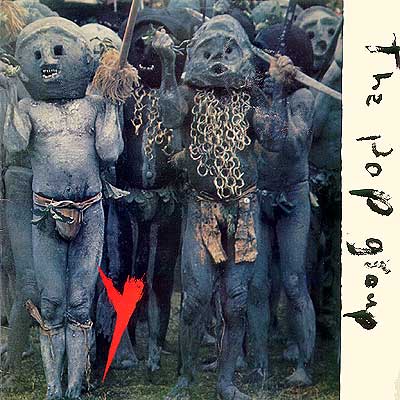
The Pop Group - She Is Beyond Good and Evil and Y

Released by Radar Records in March 1979, the Pop Group's debut single, "She Is Beyond Good and Evil" was an exhilarating splurge of disco bass, slashing punk-funk rhythm guitar, and deranged dub effects, with singer Mark Stewart caterwauling lines like "our only defense is together as an army/I'll hold you like a gun".
Lyrically, says Stewart, the song was "a very young attempt to mix up poetic, existentialist stuff with political yearnings. The idea of unconditional love as a revolutionary force - the way it kind of switches on a light, makes you hope for a better world, gives you this idealism and energy".

The Pop Group - She Is Beyond Good and Evil 1979


To record "Beyong Good and Evil", the Pop Group hooked up with Dennis Bovell, who at that point was the only British reggae producer brilliant enough to bear any comparison with the Jamaican greats like Lee Perry and King Tubby. Bovell's musical scope stretched way beyond reggae, though. He'd played lead guitar in a Hendrix-influenced band called Stonehenge and believed that Jimi had created the first dub track ever in 1967 with "Third Stone from the Sun".

Jimi Hendrix - Third Stone from the Sun 1967


For "3:38", the B-side to "Beyond Good and Evil", he took the A-side's music and ran it backward, psychedelic-style, then built a new rhythm track for it with Bruce Smith (Pop Group's drummer). "We'd almost run out of studio time, that's why I reused the A-side", says Bovell.

The Pop Group - 3:38 1979


Working on their debut album Y, Bovell quickly grasped that the rhythm section held the whole band together. "Simon Underwood and Bruce Smith, they were the Sly and Robbie of the postpunk period, tight", says Bovell. "The thing that was not together about the Pop Group was Gareth Sager's and John Waddington's guitars and Mark's singing, which would be drifting all across the frame".


Pop Group songs like "We Are Time" blazed with a rage to live. "Not wanting to just be alive", says Stewart, "but to rid yourself of all constrictions. We had this romantic idea of going through nihilism, this intense deconditioning process, and emerging on the other side with something really positive".

The Pop Group - We Are Time 1979


Fire figured in the Pop Group's imagination as an ideal state of being, evoking inner-city riots, pagan rituals, the 1960s free jazz of Archie Shepp's Fire Music. One of the band's best songs, "Thief of Fire", used the Prometheus myth to talk about the quest for "prohibited knowledge, going into unknown areas".

The Pop Group -Thief of Fire 1979


Although the sheer funk force of Underwood and Smith makes the up-tempo songs like "We are Time" physically compelling, elsewhere Y veers into texture-saturated abstraction with sound paintings like "Savage Sea" and "Don't Sell Your Dreams".

The Pop Group - Savage Sea 1979


The Pop Group - Don't Sell Your Dreams 1979