Showing posts with label post punk. Show all posts

Monday, November 28, 2011

Conceptual art: Wire's first three albums

Many of Wire's songs were written as acts of speculation: what would happen if you rewrote "Johnny B. Goode" using only one chord? (The answer: debut album Pink Flag's title track). 

Wire - Pink Flag - 1977


Singer/guitarist Colin Newman composed "106 Beats That" on an agonizingly delayed train journey between Watford and London, during which he devised a complicated system of correspondences between the names of railway stations and guitar chords. Bassist Graham Lewis's words for "106 Beats That" came out of a failed attempt to write a lyric that contained only a hundred syllables: 'It turns out it's got one hundred and six, but that doesn't matter, because you've created a process'.

Wire - 106 Beats That - 1977


Newman wrote a lyric about a lion tamer that Lewis mostly didn't care for, so he deleted all the bits he didn't like and replaced them - hence the song's eventual title, "Ex-Lion Tamer". Dismembering sequential narrative was a favourite Lewis tactic.

Wire - Ex-Lion Tamer - 1977


Their sophomore album Chairs Missing reinvents psychedelia while preserving the group's signature quality of monochromatic minimalism.


The guitars have an ultra-vivid gloss; "French Film Blurred" is a vitreous shimmer, while the lyrics came from Newman's attempt to watch a foreign movie on a TV with reception so poor he couldn't read the subtitles, forcing him to make up the dialogue.

Wire - French Film Blurred - 1978


On "Being Sucked in Again" even the bass emits an unnatural glow, like fluorescent marble.

Wire - Being Sucked in Again - 1978


Producer Mike Thorne had brought back state-of-the-art effects units from America: MX-R distortion, flanges, and new sound effects operating in what Thorne calls 'the time domain, like delays and chorus pedals'. Says Newman, 'The MX-R unit provided this very clean and un-heavy metal distortion. "I Am The Fly" is literally that sound - like glass. On Chairs Missing we were just streets ahead when it came to guitar sounds'.

Wire - I Am The Fly - 1978


For a towering post-punk masterpiece, though, Chairs Missing received a surprisingly mixed reception in 1978. The NME's Monty Smith accused the group of degenerating from Pink Flag to Pink Floyd in less than a year. But, apart from the odd Electric Prunes-like guitar sound, the only true sixties throwback on the album was the beguilling, Byrds-like "Outdoor Miner" - the closest Wire ever got to a hit single - with its honeyed harmonies and idyllic, chiming chords. Dense with assonance and internal rhyme, the lyric to "Outdoor Miner" sounds like sensuous nonsense, a typical example of Wire revelling in language for its melt-in-your-mouth musicality rather than meaning. (Typical line: 'face worker, serpentine miner, a roof falls, an underliner, of leaf structure the egg timer'.) In fact, it was obliquely inspired by a Radio Four wildlife programme, from which Lewis learned about a bug called the serpentine miner, which lives inside holly leaves and eats chlorophyll.

Wire - Outdoor Miner - 1978


"Marooned" was a fantasy vignette about an Arctic castaway resigned to his fate - 'as the water gets warmer my iceberg gets smaller'.

Wire - Marooned - 1978


By their third album, 154, Wire's music was becoming almost oppressively textured. 


The opener, "I Should Have Known Better", sung by Lewis in a doomy baritone, expressed animosity with steely precision: 'I haven't found a measure yet/To calibrate my displeasure yet'.

Wire - I Should Have Known Better - 1979


Newman's "Two People in a Room" depicted emotional conflict as stratagem and manoeuvre ('Positions are shifted/The cease-fire unlifted') and elliptically evoked the disintegration of Wire itself into rival aesthetic camps.

Wire - Two People in a Room - 1979


All densely overdubbed guitars and stacked vocals, "Map Ref. 41° N 93° W", the single off 154, was majestic, but its beauty was oddly remote, just like the cartographer's eye-view lyric, inspired by a flight over Iowa. As pop choruses go, 'Lines of longitude and latitude/Define and refine my altitude' doesn't exactly scream, 'chart potential'.

Wire - Map Ref. 41° N 93° W - 1979


Graham Lewis described Pink Flag's "Lowdown" as 'an experiment in deconstructed funk, almost a critique of funk - very dark and slowed down, to the point of non-funkiness'.

Wire - Lowdown - 1977


When the four reunited in 1985 to have a second crack at being Wire, they rededicated themselves to the monolithic, funkless force rhythm they nicknamed 'dugga'. The first song they wrote after five years apart was called "Drill". And it sounded like one.

Wire - Drill 1986

Thursday, September 15, 2011

Playing with a different sex: Delta 5 and The Au Pairs

The women in Delta 5 often wrote from a standpoint of defiance, aloofness, self-assertiveness, and unapproachable autonomy. "Mind Your Own Business", their debut single, was hilariously coldhearted and standoffish, resolutely barring entrance to someone craving intimacy and involvement. "Can I interfere in your crisis?/No! Mind your own business!"

Delta 5 - Mind Your Own Business 1979


"You", the second single, was funnier still, a series of accusations and recriminations. "Who left me behind at the baker's?/YOU, YOU, YOU, YOU!/Who likes sex only on Sundays?/YOU, YOU, YOU, YOU!"

Delta 5 - You 1980


Another hard-riffing agit-funk band with a mixed-gender lineup and songs that scrutinized sexuality with an unforgiving eye was The Au Pairs.
Their most famous song, "Come Again", depicts an egalitarian couple who is trying to achieve orgasmic parity. Sung as a duet, it's a microdrama in which Paul Foad plays the eager-to-please man earnestly frigging his long-suffering partner, Lesley Woods. "Is your finger aching?/I can feel you hesitating", she wonders, as the likelihood of orgasm fades to zero. By the end, despite everyone's progressive intentions, she's simply discovered "a new way to fake".

The Au Pairs - Come Again (BBC Sessions) 1981

Saturday, September 3, 2011

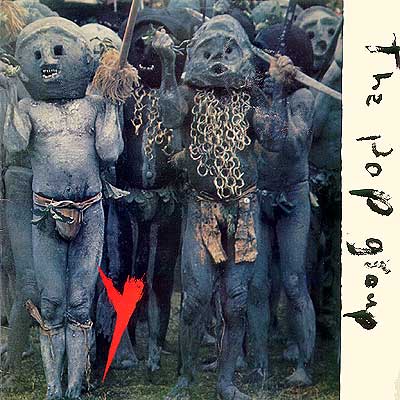
The Pop Group - She Is Beyond Good and Evil and Y

Released by Radar Records in March 1979, the Pop Group's debut single, "She Is Beyond Good and Evil" was an exhilarating splurge of disco bass, slashing punk-funk rhythm guitar, and deranged dub effects, with singer Mark Stewart caterwauling lines like "our only defense is together as an army/I'll hold you like a gun".
Lyrically, says Stewart, the song was "a very young attempt to mix up poetic, existentialist stuff with political yearnings. The idea of unconditional love as a revolutionary force - the way it kind of switches on a light, makes you hope for a better world, gives you this idealism and energy".

The Pop Group - She Is Beyond Good and Evil 1979


To record "Beyong Good and Evil", the Pop Group hooked up with Dennis Bovell, who at that point was the only British reggae producer brilliant enough to bear any comparison with the Jamaican greats like Lee Perry and King Tubby. Bovell's musical scope stretched way beyond reggae, though. He'd played lead guitar in a Hendrix-influenced band called Stonehenge and believed that Jimi had created the first dub track ever in 1967 with "Third Stone from the Sun".

Jimi Hendrix - Third Stone from the Sun 1967


For "3:38", the B-side to "Beyond Good and Evil", he took the A-side's music and ran it backward, psychedelic-style, then built a new rhythm track for it with Bruce Smith (Pop Group's drummer). "We'd almost run out of studio time, that's why I reused the A-side", says Bovell.

The Pop Group - 3:38 1979


Working on their debut album Y, Bovell quickly grasped that the rhythm section held the whole band together. "Simon Underwood and Bruce Smith, they were the Sly and Robbie of the postpunk period, tight", says Bovell. "The thing that was not together about the Pop Group was Gareth Sager's and John Waddington's guitars and Mark's singing, which would be drifting all across the frame".


Pop Group songs like "We Are Time" blazed with a rage to live. "Not wanting to just be alive", says Stewart, "but to rid yourself of all constrictions. We had this romantic idea of going through nihilism, this intense deconditioning process, and emerging on the other side with something really positive".

The Pop Group - We Are Time 1979


Fire figured in the Pop Group's imagination as an ideal state of being, evoking inner-city riots, pagan rituals, the 1960s free jazz of Archie Shepp's Fire Music. One of the band's best songs, "Thief of Fire", used the Prometheus myth to talk about the quest for "prohibited knowledge, going into unknown areas".

The Pop Group -Thief of Fire 1979


Although the sheer funk force of Underwood and Smith makes the up-tempo songs like "We are Time" physically compelling, elsewhere Y veers into texture-saturated abstraction with sound paintings like "Savage Sea" and "Don't Sell Your Dreams".

The Pop Group - Savage Sea 1979


The Pop Group - Don't Sell Your Dreams 1979

Monday, August 15, 2011

Devo - Jocko Homo & Mongoloid

I'd never heard anything so creepy and debased as their early single "Jocko Homo" and its flip side, "Mongoloid", brought around our house by a far more advanced friend.

Devo - Jocko Homo - 1977


Devo - Mongoloid - 1977


Sex Pistols - Bodies

The profanity hooked me first (I was fourteen), Johnny Rotten's "fuck this and fuck that/Fuck it all and fuck her fucking brat". More than the naughty words themselves, it was the vehemence and virulence of Rotten's delivery-those percussive "fucks", the demonic glee of the rolled rs in "brrrrrrat".

Sex Pistols - Bodies - 1977


Scenes from Rip It Up and Start Again - An introduction

Today I started reading Simon Reynolds' book "Rip It Up And Start Again - Post Punk 1978-1984". From the first pages I noticed that there was something missing: I had never heard the majority of the bands or songs he was talking about and therefore could only have a partial comprehension of the music the author described. That's how I had the idea to start this project, with the aim to provide readers with an useful audiovisual companion while reading the book.
Each day I will post audio and video links of the music Reynolds describes in his book, together with some quotes from "Rip It Up And Start Again". Hopefully, this will allow readers to have a better understanding of the music that is so thoroughly described in the book.