Showing posts with label album. Show all posts

Sunday, October 23, 2011

Joy Division - Unknown Pleasures & Closer

Released at the height of British summertime - June 1979 - the album caught the eye as well as the ear: the cover, designed by Factory's art director Peter Saville, was a matt-black void apart from a small scientific diagram of rippling lines whose crinkled crests and sharp slopes resemble the outlines of a mountain range. Joy Division's guitarist Barney Sumner had found the diagram in the Cambridge Encyclopaedia of Science: it's a Fourier analysis of 1000 consecutive light spasms emitted by the pulsar CP 1919. Left behind when a massive sun exhausts its fuel and collapses in on itself, a pulsar is highly electromagnetic and emits regular flashes of intense energy, like a lighthouse in the pitch-black night. Perhaps that's how Ian Curtis was beginning to see himself - as a magnetic star sending out a signal, a beacon in the darkness.


With its vast drumscape, permafrost synths and cascading chimes, "Atmosphere", Joy Division's breathtaking next single, sound like nothing else in rock, except maybe some dream collaboration between Nico and Phil Spector.

Joy Division - Atmosphere 1980


The image on the single - a hooded monk, his back turned to the viewer, stalking a snow-covered Alpine peak - captures the moment when a certain religiosity began to gather around Joy Division.


A 'strange social climate' (as Hannett put it) surrounded the March 1980 sessions for Closer, Joy Division's second album. Hannett described the record as 'kabbalistic, locked in its own mysterious world'. The sleeve featured a photograph taken in a Genoa cemetry, a sculpted tableau of the dead Christ surrounded by grief-stricken mourners.


Compared with Unknown Pleasures, the textures of Closer are more ethereal and experimental: bassist Peter Hook often used a six-string bass, for more melody, while Sumner built a couple of synthesizers from kits. Morris had acquired a drum synth and fed it through 'the shittiest fuzz pedal you can imagine' to generate the slaughterhouse of hacking and shearing, metal-on-bone noise in the background of "Atrocity Exhibition", Closer's opener.

Joy Division - Atrocity Exhibition 1980


Listening to Closer, it's like you are inside Curtis' head, feeling the awful down-swirling drag of terminal depression. Side one is all agony: the swarming knives of "Atrocity"; the ice-shroud glaze of "Isolation" - Curtis swathed in a barbiturate haze, his voice mineralized by Hannett's effects. The treadmill motion of "Passover" sounds like the group's batteries are running down. It's followed by the tough, punitive rock of "Colony" and "A Means to an End", in which the drums finally decelerate like a dying machine.

Joy Division - Isolation 1980


Joy Division - Passover 1980


Joy Division - Colony 1980


Joy Division - A Means to an End 1980


Closer's second side is even more disturbing, but this time on account of its serenity. It's as though Curtis has stopped struggling altogether: the numb trance and narcotic glide of "Heart and Soul"; the alternately desperate and resigned "Twenty-Four Hours", its beautiful bass like the pulse of a heavy heart, Curtis's voice disconcertingly deep, like the microphone is right inside his chest; the epic colonnades of "The Eternal", seen through misty eyes, as if Curtis is watching his own funeral procession; finally the listless, clip-clop beat of "Decades", its synths eroded and washed out, like aged Super-8 home movies of happy childhood memories.

Joy Division - Heart and Soul 1980


Joy Division - Twenty-Four Hours 1980


Joy Division - The Eternal 1980


Joy Division - Decades 1980


The last lyric Curtis ever finished, "In a Lonely Place", featured a death-wish reference to 'caressing the marble and stone'. The crisis came on 18 May 1980. After visiting his estranged wife and asking, unsuccessfully, for her to drop the divorce, Curtis stayed up all night, watching a movie by his favourite director Werner Herzog and listening to Iggy Pop's The Idiot. Finally, he hung himself as 'that awful daylight' ("In a Lonely Place") approached.

Joy Division - In a Lonely Place 1980


Saville gave the posthumous single "Love Will Tear Us Apart" an exquisite abstract cover that looked like the lustrous stone interior of a cenotaph. The song became Joy Division's first chart hit.


Curtis's crooning vocal, Hook's bass and Sumner's keyboard trace in unison the same shy, crestfallen melody, while Morris's drumming skitters with feathery unrest. On "Love Will Tear Us Apart" and its savage B-side, "These Days", the singer and the music both sound raw and exposed, like they've got no skin. The words are laceratingly candid glimpses into a dying relationship, snapshots of bad sex and broken trust. Although the marriage break-up was only one factor, "Love Will Tear Us Apart" was taken as Curtis's suicide note to the public: the official explanation.

Joy Division - Love Will Tear Us Apart 1980


Joy Division - These Days 1980

Thursday, October 20, 2011

Joy Division and Martin Hannett's production

Joy Division began life as Warsaw - to most contemporary ears, a fairly undistinguished, punk-inflected hard-rock band. "Digital", the group's first recording as Joy Division, sounds not a million miles from Black Sabbath's "Paranoid": a dark, fast pummel, a full-tilt dirge fusing pace and ponderousness.

Joy Division - Digital 1978


Black Sabbath - Paranoid 1970


Joy Division's use of Nazi imagery stemmed from morbid fascination; and as such, was often in questionable taste. On the mini-album Short Circuit: Live at the Electric Circus - a document of the Manchester punk scene - singer Ian Curtis can be heard screaming at the crowd, 'Do you all remember Rudolf Hess?'

Joy Division - At A Later Date (from Short Circuit: Live at the Electric Circus) 1978


In June 1978 the group self-released their first record, the Warsaw EP An Ideal for Living. The sleeve featured a drawing of a blond-haired Hitler Youth drummer boy and a photograph of a German stormtrooper pointing a gun at a small Polish Jewish boy.


Curtis was also intrigued by the mass psychology of fascism - the way a charismatic leader could bewitch an entire population into doing, or accepting, irrational and monstrous things. The early song "Walked in Line" is about those who just did what they were told, committing crimes in a 'hypnotic trance'.

Joy Division - Walked in Line 1979


Curtis' doomy baritone and obsession with the dark side often got him compared to Jim Morrison. Indeed, The Doors were one of the singer's favourite bands. Joy Division's "Shadowplay" is like "LA Woman" turned inside out, the latter's rolling, virile propulsion reduced to a bleak transit across a city that could hardly be less like sun-baked southern California.

Joy Division - Shadowplay 1979


The Doors - LA Woman 1971


"Digital", Martin Hannett's first Joy Division production, was titled after his favourite sonic toy, the AMS digital delay line. His most distinctive use of the AMS digital delay was subtle, though: he applied a micro-second delay to the drums that was barely audible but which created a sense of enclosed space - a vaulted sound, like the music was recorded in a mausoleum. Hannett also wove subliminal shimmers deep into the recesses of Joy Division's records. And he loved the occasional extreme effect: on the debut Unknown Pleasures, he miked up the clanking of an antique lift for "Insight" and incorporated smashing glass on "I Remember Nothing".

Joy Division - Insight 1979


Joy Division - I Remember Nothing 1979


Hannett demanded totally clear and clean 'sound separation', not just for individual instruments, but for each element of the drum kit. "Typically on tracks he considered to be potential singles, he'd get me to play each drum on its own to avoid any bleed-through of sound", sighs drummer Stephen Morris. "First the bass-drum part. Then the snare part. Then the high hats". Not only was this tediously protracted; it created a mechanistic, disjointed effect. "The natural way to play drums is all at the same time. So I'd end up with my legs black and blue 'cos I'd be tapping on them quietly to do the other bits of the kit that he wasn't recording". 
This dehumanizing treatment - essentially turning Morris into a drum machine - was typical of Hannett's rather high-handed attitude to musicians. But the disjointedness certainly added to the music's alienated feel. You can hear it on one of the high points of the Hannett-Joy Division partnership, "She's Lost Control", with its mechano-disco drum loop, tom-toms like ball-bearings, a bassline like steel cable undulating in strict time, and a guitar like a contained explosion - as if the track's only real rock-out element has been cordoned off.

Joy Division - She's Lost Control 1979

Monday, September 26, 2011

Devo & the video for "Whip It"

The band moved to Los Angeles, capital of the entertainment business, and with 1980's Freedom of Choice made a record even more calculatedly commercial than the clinical-sounding Duty. This gave Devo their own platinum album, spurred on by the Top 20 success of "Whip It".


Written during the ailing twilight of the Carter presidency, "Whip It" offered Dale Carnegie-style advice to the embattled leader. "Come on Jimmy, get your shit together", laughs Mothersbaugh. By the time Warner Brothers allowed Devo to make a promo clip for the song, it was clear that Reagan was heading for a landslide victory. Devo made the video into a surreal commentary on America's shift to the Right. The result was a video that twenty-five years later is not the least bit dated looking and is still a huge hoot. It was Devo's one true moment of mass-cultural triumph.
Pitched somewhere between a John Ford Western and David Lynch's Eraserhead, the genuinely creepy video for "Whip It" perfectly cristallizes Devo's "freak show aesthetic". As a bunch of Texas stud muffins and blonde bimbos gawk and giggle, Mothersbaugh wields a whip and one by one lashes away the garments of a strange Grace Jones-like amazon of a woman, whose legs start trembling in an indescribably abject way as she waits for the final whip crack to strip off her last shred of modesty. Meanwhile, the rest of Devo performs the song cooped inside a cattle pen - pasty-faced spud-boys wearing shorts that show off their scrawny knees and the famous "flowerpot hats". "We were horrified by Reagan's ascent", says Casale, "So we were just making fun of myths of cowboys in the West".

Devo - Whip It 1980


As the new decade progressed, the original "eighties industrial band" got chewed up by the industry. Even as they railed against Reaganism with songs like "Freedom of Choice" and "Through Being Cool", Devo found themselves increasingly bossed around by their record company.

Devo - Freedom of Choice 1980


Devo - Through Being Cool 1981

Wednesday, September 21, 2011

Devo - Duty Now for the Future

An icky squeamishness contaminated Devo's sex songs, from their earliest efforts like "Buttered Beauties" (in which Mothersbaugh imagines female secretions smeared all over him like "glossy tallow"), to the chorus "I think I missed the hole" in the debut album's "Sloppy (I Saw My Baby Gettin')". They loved pornography, whether it was Bataille's avant-garde version or Hustler's mass-market hardcore. "I wrote a song called 'Penetration in the Centerfold' about the first Hustler I ever saw", says Mothersbaugh.

Devo - Sloppy (Single version) 1977


Devo - Penetration in the Centerfold 1979


What emerged from these impulses and inputs were songs that, beneath the quirky Dada surface, were often plain misogynistic in the most conventional sense. On the debut, "Gut Feeling" segues straight into "Slap Your Mammy", while "Triumph of the Will" on the second album, Duty Now for the Future, reads like a Nietzschean justification for rape: "It was a thing I had to do/It was a message from below...It is a thing females ask for/When they convey the opposite".

Devo - Triumph of the Will 1979

Tuesday, September 20, 2011

Devo's first singles and debut album "Q: Are We Not Men? A: We are Devo!"

As expressed in the anthem "Be Stiff", Devo's proudly neurotic, uptight attitude was a revolt against the take-it-easy baby boomers. "We were anything but hippies - loose, natural", Devo founder Gerard Casale recalled years later.

Devo - Be Stiff 1977


Devo's first two singles, "Satisfaction" and "Jocko Homo" - self-released on the group's own Booji Boy label -were relatively torpid compared with their later frantic sound. This was partly because "Jocko Homo" and its B-side, "Mongoloid", were recorded in a garage with no heating during a freezing winter, with the band wearing gloves.

Devo - (I Can't Get No) Satisfaction (single version) 1977


Devo - Mongoloid (album version) 1978


Whenever feasible, Devo gigs began with The Beginning Was the End: The Truth About De-Evolution, a ten-minute film directed  by their friend Chuck Statler, whom they'd originally met in an experimental-art class at Kent State University. Statler's minimovie generated the enduringly famous images of Devo: singer Mark Mothersbaugh as mad professor in bow tie and white coat giving a student lecture on devolution, the rest of the band wearing plastic sunglasses and colored tights pulled tightly over their heads to squish their features, bank-robber style.

Devo - Jocko Homo (from The Truth About De-Evolution) 1976


Devo recorded their debut, Q: Are We Not Men? A: We Are Devo!, in Germany while still embroiled in negotiations with labels (in the end, owing to a dispute over verbal agreements, Virgin and Warner Brothers both got the group, releasing Devo's records in the U.K. and America, respectively).


Released in August 1978, Q: Are We Not Men? is a stone classic, but it does suffer slightly from falling between two extremes, neither capturing the full frenzy of Devo's live shows nor making a total foray into producer Brian Eno's post-Low soundworld. "In retrospect, we were overly resistant to Eno's ideas", says Mothersbaugh. "He made up synth parts and really cool sounds for almost every song on the album, but we only used them on three or four songs...like the loop of monkey chanters that's on 'Jocko Homo'".

Devo - Jocko Homo (album version) 1978


You can still hear the Eno imprint. "Shrivel Up" is dank with synth slime, giving the song an abject feel that fits the lyrics about decay and mortality.

Devo - Shrivel Up 1978


"Gut Feeling" takes garage punk's woman-done-me-wrong rage and gives it a perverse twist: "You took your tongs of love and stripped away my garment".

Devo - Gut Feeling 1978


"Uncontrollable Urge" makes rock's "wild sexuality" seem as absurd and humiliating as an involuntary nervous tic.

Devo - Uncontrollable Urge 1978


"Come Back Jonee" likewise turns Chuck Berry's "Johnny B. Goode" inside out. In Devo's tune, the heartbreaker bad boy "jumps into his Datsun", the OPEC 1970s low-gas-consumption version of a real rock 'n' roll automobile like a T-Bird.

Devo - Come Back Jonee 1978

Their cover of the Rollling Stones' "Satisfaction" - which defiled the iconic sixties classic by reducing it to a desiccated theorem - was a hit in several European countries. Devo's disco-punk version resembled, in Mothersbaugh's words, "a stupid perpetual-motion machine clanking around the room".

Devo - Satisfaction (album version) 1978

Monday, September 19, 2011

Pere Ubu - The Modern Dance and Dub Housing

With outside interest in the Ohio scene reaching its peak, Blank Records released Ubu's debut album, The Modern Dance, in March 1978, while in April U.K. label Radar Records put out Datapanik in the Year Zero, an EP that made widely available for the first time the best tracks from the first three singles released on Hearthan Records.


At the eight of both their acclaim and artistic power, Pere Ubu sealed the impression of their creative floodgates having been hurled wide open by unleashing a second, even more impressive album only seven months after the debut.  


Dub Housing got its evocative name not from any reggae leanings, but a stoned eye's view of Baltimore as the band drove through the city in their tour van. "In Baltimore they had these row houses, and somebody said, 'Oh, look, dub housing'", says drummer Scott Krauss. The vistas echoed endlessly, paralleling the way that drum hits, guitar chords, and horn licks were turned into reverb trails by dub producers like King Tubby.

Pere Ubu - Ubu Dance Party 1978


The Modern Dance and Dub Housing both contained absurdist sound collages and exercises in pure Dada like "The Book Is on the Table" and "Thriller". These now became the blueprint for Ubu's third album, New Picnic Time.


"Our problem is that we never wanted to repeat Dub Housing", Thomas once said. "That desire to never repeat became as much of a trap as trying to repeat formulas the way some bands do". "We were on the edge of being popular but we were fundamentally incapable of being popular", Thomas admits, "because we were fundamentally perverse".

Friday, September 16, 2011

Gang of Four - Solid Gold


The band's rampaging, balls-out rock side got captured on Solid Gold, which was released in early 1981. Sporadically exciting, the album's live-sounding production was more conventional than Entertainment!'s dessicated starkness.
Lyrically, Gill and King seemed to have lost their touch. The songs veered from crude, third-person typology (the protofascist caricatures of "Outside the Trains Don't Run On Time" and "He'd Send in the Army") to clumsy satire (the anti-American "Cheeseburger").

Gang of Four - Outside the Trains Don't Run On Time 1981


Gang of Four - He'd Send in the Army 1981


Gang of Four - Cheeseburger 1981


The better songs like "Paralysed" and "What We All Want" struck a note of sadness that tapped into the apprehensive mood that pervaded the start of the eighties, as the implications of the Thatcher and Reagan victories began to sink in.

Gang of Four - What We All Want 1981


The supine despondency of "Paralysed" offered an occasional glimpse of fragility in Gang of Four's music. The spoken lyric was taken by most reviewers as the lament of a man laid low by being laid off. According to Gill, who wrote and recited it, it's actually much closer to the blues in the original sense.

Gang of Four - Paralysed 1981

Wednesday, September 14, 2011

Gang of Four - "At Home He Feels Like a Tourist" and "Entertainment!"

While the Mekons struggled to promote Quality of Mercy, Gang of Four released their debut major-label single, "At Home He Feels Like a Tourist". The lyrics obliquely critiqued leisure and entertainment as surrogates for real satisfaction and stimulation. Lyrically opaque, the song was sonically Gang of Four's starkest and most compelling yet. Gill's backfiring guitar slashed across the robotic/hypnotic mesh of drums and bass, which sounded like "perverted disco", in Jon King's words.

Gang of Four - At Home He's a Tourist (Album version) 1979


Entertainment!, the debut album, is one of postpunk's defining masterworks, every aspect of the record (lyrics, music, artwork - the famous cover image of the fooled indian shaking hands with the cowboy eager to exploit him) is perfectly aligned. 
The sheer sound of the record - sober, flat, at once in-your-face and remoted - stood out. Entertainment! broke with with rock-recording conventions by being extremely "dry", in the technical sound-engineering sense of "no reverb, drums that didn't ring", says Burnham. There was no attempt to capture  what the group sounded like live, no gesture toward simulating music being played in a real acoustic space. This was obviously a studio artifact, a cold-blooded construction.


Entertainment! was dry in the emotional sense too, using the scalpel of Marxist analysis to dissect the mystifications of love, "capitalist democracy", and rock itself. And so "Contract", one of Entertainment!'s most unnerving songs, recasts matrimony in terms of a business arrangement, "a contract in our mutual interest". It shifts from the concrete specifics of a malfunctioning partnership - disagreements, disappointing sex - to the scripted nature of the unhappily married couple's conflict: "These social dreams/Put in practice in the bedroom/Is this so private?/Our struggle in the bedroom".

Gang of Four - Contract 1979


Recoiling from consumerism's "coercion of the senses", "Natural's Not in It" similarly insists there's "no escape from society". "Not Great Men" challenges history written from the standpoint of powerful leaders like kings and generals while ignoring the little people who build palaces and fight wars.

Gang of Four - Not Great Men 1979


Rerecorded for Entertainment!, "Love Like Anthrax" now featured a Gill dissertation on the love song as a staple of pop music issuing from one speaker, while the romance-ravaged King wailed out of the other. Gill ponders why pop groups sing about love constantly, expresses doubt that everyone is capable of this allegedly universal emotion, and concludes, "I don't think we're saying there's anything wrong with love, we just don't think that what goes on between two people should be shrouded in mystery". The polemic is spot-on. Propagated by Hollywood and popular song, the myth of romantic love gradually replaced religion as the opiate of the people in the twentieth century.

Gang of Four - Anthrax (Album version) 1979

Tuesday, September 13, 2011

The Mekons' second single and debut album

The Mekons' second single for Fast Product, the indie smash "Where Were You?" was released toward the end of 1978 and quickly sold out its 27.500-copy first pressing.

The Mekons - Where Were You? 1978


The Mekons were eventually persuaded to step up to the major leagues and sign with Virgin. But the big time didn't really suit a group based around amateurish charm. All the life was sucked out of the Mekons' debut LP, The Quality of Mercy Is Not Strnen, by its being recorded in Virgin's topflight studio, the Manor.

Saturday, September 3, 2011

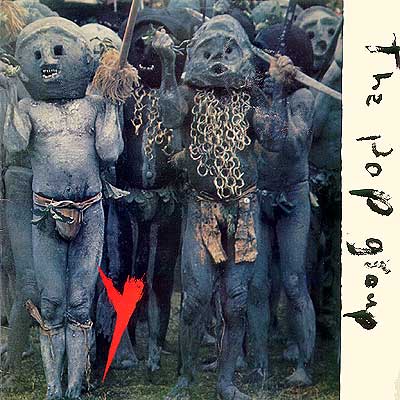
The Pop Group - She Is Beyond Good and Evil and Y

Released by Radar Records in March 1979, the Pop Group's debut single, "She Is Beyond Good and Evil" was an exhilarating splurge of disco bass, slashing punk-funk rhythm guitar, and deranged dub effects, with singer Mark Stewart caterwauling lines like "our only defense is together as an army/I'll hold you like a gun".
Lyrically, says Stewart, the song was "a very young attempt to mix up poetic, existentialist stuff with political yearnings. The idea of unconditional love as a revolutionary force - the way it kind of switches on a light, makes you hope for a better world, gives you this idealism and energy".

The Pop Group - She Is Beyond Good and Evil 1979


To record "Beyong Good and Evil", the Pop Group hooked up with Dennis Bovell, who at that point was the only British reggae producer brilliant enough to bear any comparison with the Jamaican greats like Lee Perry and King Tubby. Bovell's musical scope stretched way beyond reggae, though. He'd played lead guitar in a Hendrix-influenced band called Stonehenge and believed that Jimi had created the first dub track ever in 1967 with "Third Stone from the Sun".

Jimi Hendrix - Third Stone from the Sun 1967


For "3:38", the B-side to "Beyond Good and Evil", he took the A-side's music and ran it backward, psychedelic-style, then built a new rhythm track for it with Bruce Smith (Pop Group's drummer). "We'd almost run out of studio time, that's why I reused the A-side", says Bovell.

The Pop Group - 3:38 1979


Working on their debut album Y, Bovell quickly grasped that the rhythm section held the whole band together. "Simon Underwood and Bruce Smith, they were the Sly and Robbie of the postpunk period, tight", says Bovell. "The thing that was not together about the Pop Group was Gareth Sager's and John Waddington's guitars and Mark's singing, which would be drifting all across the frame".


Pop Group songs like "We Are Time" blazed with a rage to live. "Not wanting to just be alive", says Stewart, "but to rid yourself of all constrictions. We had this romantic idea of going through nihilism, this intense deconditioning process, and emerging on the other side with something really positive".

The Pop Group - We Are Time 1979


Fire figured in the Pop Group's imagination as an ideal state of being, evoking inner-city riots, pagan rituals, the 1960s free jazz of Archie Shepp's Fire Music. One of the band's best songs, "Thief of Fire", used the Prometheus myth to talk about the quest for "prohibited knowledge, going into unknown areas".

The Pop Group -Thief of Fire 1979


Although the sheer funk force of Underwood and Smith makes the up-tempo songs like "We are Time" physically compelling, elsewhere Y veers into texture-saturated abstraction with sound paintings like "Savage Sea" and "Don't Sell Your Dreams".

The Pop Group - Savage Sea 1979


The Pop Group - Don't Sell Your Dreams 1979

Friday, August 19, 2011

PiL - Public Image (First Issue) - Side A


Lydon and his colleagues overhauled their image, purging anything redolent of punk clichés and instead wearing tailored suits. This anti-rock 'n' roll image culminated with Dennis Morris's artwork for PiL's debut album, fashion-magazine-style portraits of each member of the group, immaculately coutured and coiffed. Lydon appeared on the front under italian Vogue lettering, while the reverse saw Wobble sporting a debonair 1920s lounge lizard mustache.
The album was uncompromising, throwing the listener in at the deep end with the nine-minute death wish dirge "Theme", a near cacophony of suicidal despair and Catholic guilt, with Lydon howling about masturbation as mortal sin.
It was nothing if not an orgy of twisted guitar virtuosity, Levene generating an astonishing amount of sound from a single guitar.

Pil- Theme - 1978


Next up was the anticlerical doggerel of "Religion I"/"Religion II" (a blasphemous ditty written for the Pistols and originally titled "Sod in Heaven"), followed by the hacking thrash funk of "Annalisa", the true story of a German girl who starved to death because her parents believed she was possessed by the devil and turned to the church rather than psychiatrists for help.

PiL - Religion I - 1978


PiL - Religion II - 1978


PiL - Annalisa - 1978