Showing posts with label chapter 3. Show all posts

Friday, September 9, 2011

After the Pop Group: Pigbag and Mark Stewart's Jerusalem

The Pop Group splintered into multiple bands. Maximum Joy and Pigbag pursued slightly different versions of funk. Pigbag, helmed by Simon Underwood and still associated with Dick O'Dell's Y label, became a real pop group, scoring a massive U.K. hit with "Papa's Got a Brand New Pigbag".

Pigbag - Papa's Got a Brand New Pigbag - 1985


Stewart, meanwhile, sang on the first New Age Steppers album, then made his solo debut in October 1982 with a fully realized version of "Jerusalem", the English hymn the Pop Group massacred at their last show in Trafalgar Square. Produced by Sherwood and marrying church organ swells to dub's thunderquake bass, "Jerusalem" unites Blake's vision of Albion as promised land with the Zion of Rasta's dreaming. Its declaration "I shall not cease from mental fight nor shall my sword sleep at my side/'Til we have built Jerusalem in England's green and pleasant land", served as a mission statement for Stewart's ongoing career as culture warrior. 
Amazingly, almost thirty years later he's still shouting down Babylon.

Mark Stewart & The Maffia - Jerusalem 1982

Thursday, September 8, 2011

Evolution of the Slits

Proposing a kind of cosmology of rhythm, "In the Beginning There Was Rhythm" hymned all the pulsating patterns that structure reality: "...God is riddim...Riddim is roots and roots is riddim...SILENCE! Silence is a riddim too!". Ari Up and Neneh Cherry had encountered the early underground hip-hop scene on a trip to New York, and hearing rap for the first time inspired her percussive, chanted delivery on "In the Beginning There Was Rhythm".

The Slits - In the Beginning There Was Rhythm 1980


As a sideline to the Slits, Ari Up formed New Age Steppers, a collaboration with dub producer Adrian Sherwood and his session musicians Creation Rebel. Released in the first week of 1981, the group's debut single, "Fade Away", features one of Ari Up's finest vocal performances, but its trust-in-Jah fatalism (the power-hungry and money-minded will all "fade away", leaving the righteous meek to inherit the earth) seemed disconcertingly passive, suggesting a retreat into hippielike serenity.

New Age Steppers - Fade Away 1981


One more Slits album, Return of the Giant Slits, saw the group abandon the independent scene for a major label, CBS, even bigger than their previous home Island Records. Influenced by African music, Sun Ra and Don Cherry (Neneh's father and a pioneer of ethnodelic jazz), the record's diffuse, low-key experimentalism fell into a hostile marketplace.


In songs like "Animal Space", Ari Up's pantheism took an ecomystical turn. "Earthbeat", for instance, was a lament for a sorely mistreated Mother Earth ("Even the leaves are wheezing/Even the clouds are coughing").

The Slits - Animal Space 1981


The Slits - Earthbeat 1981


After the band finally fell apart, the singer fled Babylon (aka the industrial First World) in search of any remaining havens of unspoiled Nature. Flitting from rural Jamaica to the jungles of Belize and Borneo (where she lived with tribal indians), she became a real earth mother with a family.

Wednesday, September 7, 2011

Linton Kwesi Johnson's influence on Pop Group's Mark Stewart

Stewart had been hanging with Linton Kwesi Johnson and organisations like Race Today and the Radical Alliance of Black Poets and Players. Linton Kwesi Johnson didn't exactly mince words: his antifascist anthem "Fite Dem Back" vowed "We gonna smash their brains in/'Cos they ain't got nuffink in 'em". Johnson wasn't actually a Rasta (indeed he upset many Jamaicans when he mocked Rastafarianism as an ostrich religion), but his patois-thick voice and baleful cadences gave the words, which look simplistic on the printed page, a power and authority that Stewart aspired to.

Linton Kwesi Johnson - Fite Dem Back 1979

Tuesday, September 6, 2011

Evolution of The Pop Group

Like the Slits, the Pop Group pined for a lost wholeness that they imagined existed before civilization's debilitating effects. The song "Words Disobey Me" even hinted that language itself might be the enemy, that underneath all the layers of conditioning lay a pure, inarticulate speech of the heart. "Speak the unspoken/First words of a child...We don't need words/Throw them away", beseeched Stewart.

The Pop Group - Words Disobey Me 1979


The Pop Group's mounting revulsion for corporate capitalism and corresponding desire for "purity" in a corrupt world inspired the single "We Are All Prostitutes". Musically, it's their most powerful recording. The lyrics, though, abandoned Y's imagistic delirium for a histrionic rant against consumerism, "the most barbaric of all religions". Stewart warned, "our children shall rise up against us". The Pop Group seemed to be changing from lusty poet-warriors to puritanical doomsayers.

The Pop Group - We Are All Prostitutes 1979


The backlash came in March 1980, triggered by a split single that paired the Slits' "In the Beginning There Was Rhythm" with the Pop Group's "Where There's a Will". NME's Ian Penman mockingly dissed them as "Bristol Baezes", evoking sanctimonious sixties folkie Joan Baez.

The Pop Group - Where There's a Will 1980


The second Pop Group album, For How Much Longer Do We Tolerate Mass Murder? got panned as self-righteous soapbox agitprop. The music was still fiery, and actually more focused than Y, but it was hard to stomach the crude finger-pointing of songs like "Blind Faith".

The Pop Group - Blind Faith 1980


The band seemed to proceed methodically through a checklist of issues - "Justice" dealt with police brutality, "How Much Longer" with Nixon and Kissinger's war crimes - and the self-flagellating guilt trip vibe was off-putting. "There Are No Spectators" chided the politically disengaged and passive, declaring, "There is no neutral/No one is innocent".

The Pop Group - Justice 1980


The Pop Group - How Much Longer 1980


The Pop Group - There Are No Spectators 1980


The album was relentlessly pinned to the specifics, from the sleeve with its collage of news clipping about outrages such as East Timor to songs such as "Feed The Hungry", all blurted statistics and denunciation. Hectoring and lecturing, For How Much Longer was as unpoetic as a fringe leftist pamphlet.

The Pop Group - Feed The Hungry 1980


A massive antinuclear rally held in Trafalgar Square in October 1980 was the last time the Pop Group performed together. After this high point - playing to 250.000 people - the Pop Group fell apart. "An organic disintegration", says Stewart. "There was no ill will".

Sunday, September 4, 2011

The Slits - Cut

The most delightful element in the Slits' sound on Cut is the strange geometry of the clashing and overlapping vocals, as guitarist Albertine and bass player Pollitt weave around singer Ari Up's shrill, slightly sour warble. On the opener, "Instant Hit", the girls form a roundelay of haphazard harmonies that the singer describes as "a kind of 'Frère Jacques' thing". Albertine's lyrics to "Instant Hit" depict an unhealthily thin boy who "don't like himself very much/'cos he has set his self to self-destruct" - a barbed portrait that applied equally to Sid Vicious and Keith Levene, her junkie bandmates in the band Flowers of Romance.

The Slits - Instant Hit 1979


"So Tough", a frenetic pisstake of macho posturing, gives way to the doleful skank of "Spend, Spend, Spend", its sliding bass and brittle-nerved percussion perfectly complementing the lyric's sketch of a shopaholic vainly trying to "satisfy this empty feeling" with impulse purchases.

The Slits - So Tough 1979


The Slits - Spend, Spend, Spend 1979


"Shoplifting" turns "Spend, Spend, Spend" inside out: the first song's woman-as-consumerist dupe is transformed in the second's petty-thief-as-feminist rebel. Frantic punk reggae, "Shoplifting" surges into adrenalized overdrive as Ari Up, caught red-handed, yells "do the runner". The song climaxes with a shattering scream that mingles terror, glee, and relief at escaping the supermarket detective, a yowl that collapses into the giggled gasp, "I've pissed my knickers!"

The Slits - Shoplifting 1979


The fast songs on Cut are exhilarating - "Shoplifting", "Love Und Romance" (a romance-as-brain-death parody), and the single "Typical Girls" (a diatribe against un-Slitty females who "don't create, don't rebel" and whose heads are addled with women's-magazine-induced anxieties about "spots, fat, unnatural smells").

The Slits - Typical Girls 1979


The most emotionally haunting songs, though, are down-tempo and despondent in the mold of "Spend, Spend, Spend": "FM", "Ping Pong Affair" and "Newtown".
The last takes its name from towns built from scratch after the Second World War, some encircling London and designed to absorb the capital's population overflow, others built in the rural middle of nowhere. All of them, typically, started life as an architect's and urban planner's utopian vision before swiftly degenerating into characterless gridzones of anomie and despair. "Newtown" draws a disconcerting parallel between the normal citizens hooked on cultural tranquilizers like "televisiono" and "footballino", and the Slits' own bohemian peers zonked on illegal narcotics. On the track, Albertine's jittery scrape mimics the fleshcrawling ache of cold turkey.

The Slits - Newtown 1979


Withdrawal of an emotional kind inspired "Ping Pong Affair". Ari Up measures out the empty postbreakup evenings with masturbation ("Same old thing yeah I know/Everybody does it") and cigarettes.

The Slits - Ping Pong Affair 1979


Cut's famous cover photograph of the group as mud-smeared Amazons combines nostalgie de la boue with she-warrior defiance to jab the casual record shop browser right in the eye. Naked but for loincloths and war paint, the three Slits stand proudly bare breasted, outstaring the camera's gaze. Behind them you can see the wall of a picturesque cottage, brambles and roses clambering up the side as if to underline the "we're no delicate English roses and this is no come-hither look" stance. The cottage was Ridge Farm, the studio where Bovell produced Cut. Says Ari Up, "We got so into the countryside when we were doing the album, to the point of rolling around in the earth. So we decided to cover ourselves in mud and show that women could be sexy without dressing in a prescribed way. Sexy in a natural way, and naked without being pornographic".


Saturday, September 3, 2011

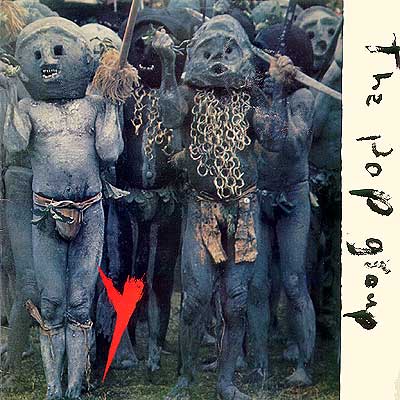
The Pop Group - She Is Beyond Good and Evil and Y

Released by Radar Records in March 1979, the Pop Group's debut single, "She Is Beyond Good and Evil" was an exhilarating splurge of disco bass, slashing punk-funk rhythm guitar, and deranged dub effects, with singer Mark Stewart caterwauling lines like "our only defense is together as an army/I'll hold you like a gun".
Lyrically, says Stewart, the song was "a very young attempt to mix up poetic, existentialist stuff with political yearnings. The idea of unconditional love as a revolutionary force - the way it kind of switches on a light, makes you hope for a better world, gives you this idealism and energy".

The Pop Group - She Is Beyond Good and Evil 1979


To record "Beyong Good and Evil", the Pop Group hooked up with Dennis Bovell, who at that point was the only British reggae producer brilliant enough to bear any comparison with the Jamaican greats like Lee Perry and King Tubby. Bovell's musical scope stretched way beyond reggae, though. He'd played lead guitar in a Hendrix-influenced band called Stonehenge and believed that Jimi had created the first dub track ever in 1967 with "Third Stone from the Sun".

Jimi Hendrix - Third Stone from the Sun 1967


For "3:38", the B-side to "Beyond Good and Evil", he took the A-side's music and ran it backward, psychedelic-style, then built a new rhythm track for it with Bruce Smith (Pop Group's drummer). "We'd almost run out of studio time, that's why I reused the A-side", says Bovell.

The Pop Group - 3:38 1979


Working on their debut album Y, Bovell quickly grasped that the rhythm section held the whole band together. "Simon Underwood and Bruce Smith, they were the Sly and Robbie of the postpunk period, tight", says Bovell. "The thing that was not together about the Pop Group was Gareth Sager's and John Waddington's guitars and Mark's singing, which would be drifting all across the frame".


Pop Group songs like "We Are Time" blazed with a rage to live. "Not wanting to just be alive", says Stewart, "but to rid yourself of all constrictions. We had this romantic idea of going through nihilism, this intense deconditioning process, and emerging on the other side with something really positive".

The Pop Group - We Are Time 1979


Fire figured in the Pop Group's imagination as an ideal state of being, evoking inner-city riots, pagan rituals, the 1960s free jazz of Archie Shepp's Fire Music. One of the band's best songs, "Thief of Fire", used the Prometheus myth to talk about the quest for "prohibited knowledge, going into unknown areas".

The Pop Group -Thief of Fire 1979


Although the sheer funk force of Underwood and Smith makes the up-tempo songs like "We are Time" physically compelling, elsewhere Y veers into texture-saturated abstraction with sound paintings like "Savage Sea" and "Don't Sell Your Dreams".

The Pop Group - Savage Sea 1979


The Pop Group - Don't Sell Your Dreams 1979